Are Steroids still a Problem in Baseball?

Steroids have circled Major League Baseball for decades now, but it seems like they have been slowing down in recent years. Less players are failing the tests and showing up to games bulked out to a point only steroids could get you there. Correlation doesn’t necessarily mean causation, however. So the question remains, is steroid usage actually decreasing across baseball?

An article by Anthony Fisher for Real Clear Life dives deeper into the possibility of continued widespread steroid usage. Fisher focuses mostly on Performance Enhancing Drugs, or PEDs. PEDs first came around in the late 1980s with Oakland Athletics’ stars Jose Canseco and Mark McGwire, who were better known as the “Bash Brothers.” Their nickname came from the nature of PEDs; they are drugs that boost your testosterone and muscle mass and increase strength immensely. These drugs undoubtedly give a huge advantage in sports and are frowned upon as cheating by most baseball fans.
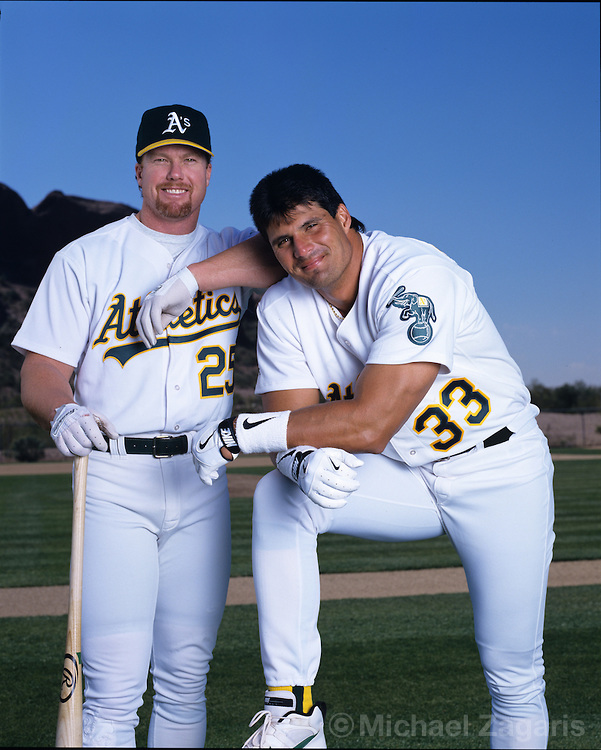
jc-mac.jpg
Mark McGwire (left) and Jose Canseco (right)

However, that wasn’t always that case. In the 1990s and early 2000s, baseball officials and owners willingly turned a blind eye to the massive number of home runs being hit. They did this for one reason: people love the long ball. Home runs bring viewers and in turn bring money, so the people that reaped the benefits let it slide. Soon after, MLB figured out that players were becoming too good, too fast, and it was unfair. They implemented a testing process to root out those using PEDs, and suspend them for cheating. Barry Bonds is a prime example of this. The Giants slugger holds the all time career home run record, but his legacy is tainted with stain of PEDs and he has been banned from the Hall of Fame indefinitely.

Even though the MLB has started cracking down on steroid usage, there likely are players still using. Likely Hall of Famer Alex Rodriguez found loopholes and bypassed drug tests for years, allowing him to stay on top of the league for over a decade. On top of the available ways to trick the tests, the MLB has created its own way for players to benefit from foreign substances. Therapeutic use Exemptions (TUEs) are confidential permissions for certain players to use banned substances. To use Alex Rodriguez as an example again, he received a TUE to take testosterone throughout the 2007 season, and he put up a season with 54 home runs and won MVP. These drugs clearly can make all the difference when it comes to skill, and we cannot allow players to get better without working for it.
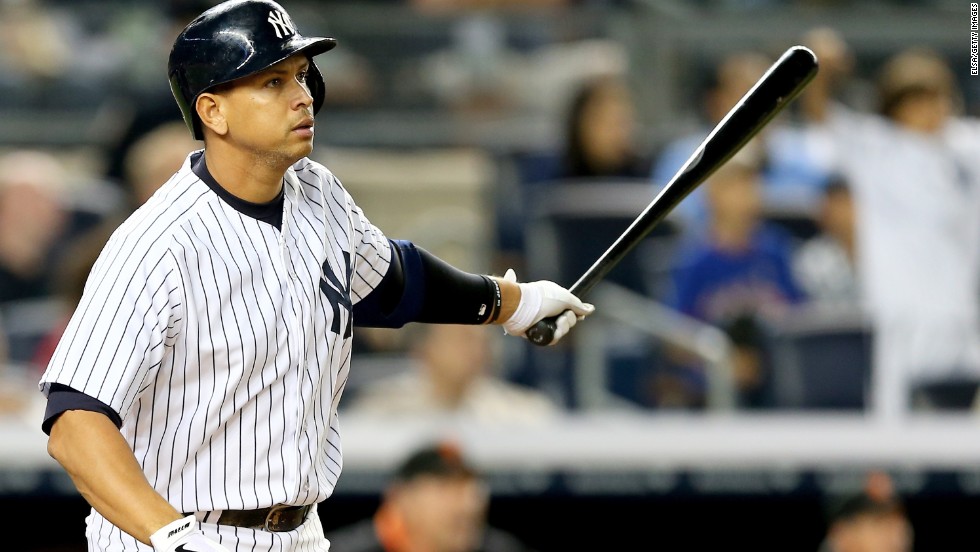
140111194127-alex-rodriguez-horizontal-large-gallery.jpg
Alex Rodriguez

It does appear as if steroid usage has gone down as of late, but we cannot know for sure. Only 7 out of 750 players tested in 2017 were found to be using banned substances. This number looks very good, but it is also scary because it could symbolize a heightened intelligence of players and a newly discovered way to cheat the drug tests. The MLB has also shown tendencies to turn a blind eye to steroids with the hopes of increased viewership and profit. The stereotypes that come with PEDs are out the window as well, making it harder to pinpoint users. Slim, speedsters Dee Gordon and Starling Marte both recently received 80 game suspensions for banned substances, and I doubt either of them breaks 200 pounds. The stigma that only power hitters take PEDs is officially out the window, and that opens the doors for pitchers as well. Steroids are seen as a drug that improves all aspect of play now, not just power hitting. This development scares me as I can easily see an increased number of users due to the widespread appeal of greater skill.

Despite all of the MLBs tests and the negative energy around steroids, players have used them for decades. Despite the appearance that these drugs may be on the decline, I would guess otherwise. The league today has turned in a powerful direction. The all time home run record occurred during the heart of the steroid era, in the year 2000, when 6,693 home runs were hit. In 2017, 6,104 home runs were hit. Many people will attribute this success to the new SabreMetric stats used in baseball (launch angle, exit velocity, etc.). But we have to face reality, PEDs are likely still making their rounds of the league, making some players better and tipping the balance of the league unfairly. This problem may never be solved, it might even make the games more entertaining, but one thing is for sure, if we cannot limit PED usage then we will never see a fair World Series Champ.
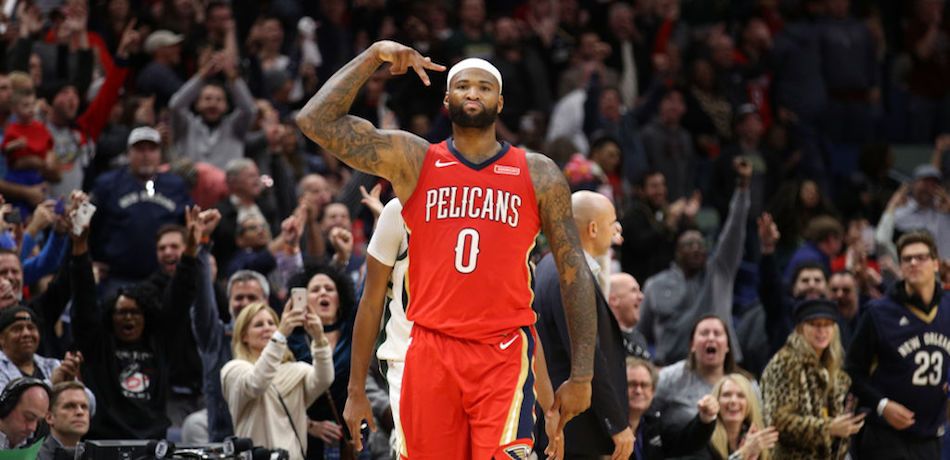
The Warriors, DeMarcus Cousins, and Widespread Fear in the NBA

The NBA has been somewhat of a mess for the past few years, featuring dominant rival teams in the Golden State Warriors and the Cleveland Cavaliers. However, as of last summer, the Cavaliers lost star player LeBron James, and the Warriors added superstar DeMarcus Cousins. Now, the scale is tipped towards the West Coast as potentially the best team in NBA history enters the season with a 63% chance to win the championship for the third time in four years. No other team in the league stacks up like the Warriors do, and nobody wants to be on the other end of a Splash Brothers beat down.

cousinsbaby.jpg

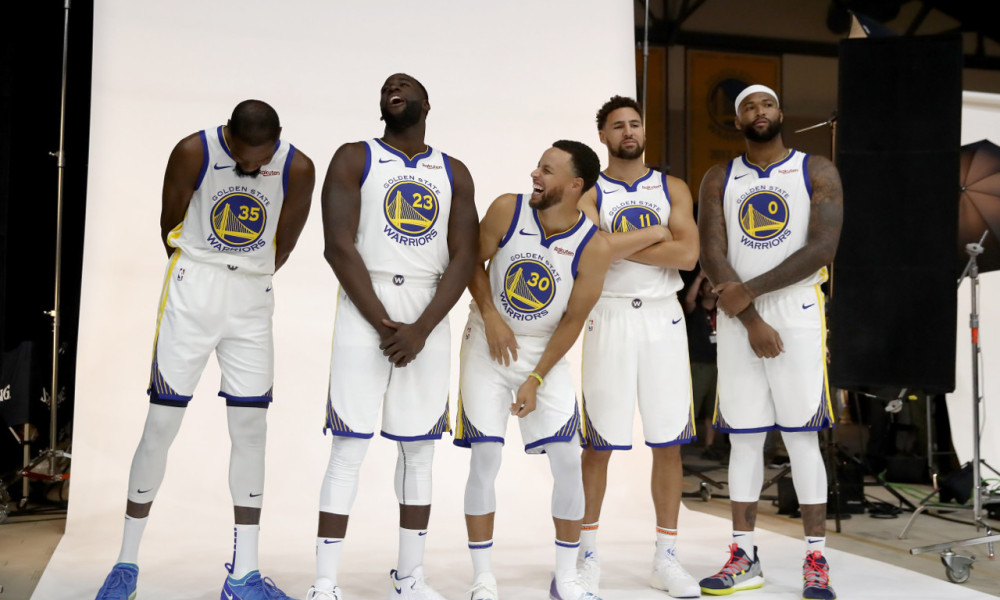
DeMarcus Cousins is a bonafide star in the NBA. He averaged 25 points, 13 rebounds, and just over 5 assists per game last season. Add that on to the impressive resume of the Golden State Warriors, and you’ve got yourself a “super team.” Author Neil Greenberg explores the potential dominance of Golden State in “DeMarcus Cousins will make the Warriors the most super ‘super team’ ever.” Greenberg explains that the Warriors lineup was the best in the business already. Point Guard Stephen Curry is a 5 time All-Star, 3 time scoring champion, and back to back MVP in 2015 and 2016. Small Forward Kevin Durant won the 2014 MVP, is a 4 time scoring champion, and has been named to 8 All-NBA teams. Power Forward Draymond Green won 2017 Defensive Player of the Year, is a 4 time All-Star, and has been on the All-Defense team 4 times. And Shooting Guard Klay Thompson, the least decorated of the bunch, is a 4 time All-Star, and has been named to 2 All-NBA teams.

Adding Cousins to these stars will mark the first time that an NBA team has started 5 All-Stars since the Celtics in the 1975 season. Greenberg also informs readers that there are cons to Cousins’ trip out West. For example, the big man will have to share the ball more than he has in the past, as well as moving towards the hoop more often instead of camping outside the three-point line. The team is expected to have no issues however.

Greenberg’s article goes in depth on how dominant the Warriors will likely be. On paper, he is 100% correct. Golden State should be purely unstoppable. However, team functionality relies on more than just pure skill. Players have to be fluid and have chemistry with each other. There cannot be arguments amogst each other or disruptions to the flow of play. Unfortunately, the Warriors currently harbor two of the NBA’s biggest trouble-makers in Draymond Green and DeMarcus Cousins. Both players often finish first and second in the league in flagrant fouls and ejections, and this unpredictability could endanger a fourth consecutive championship appearance for the Warriors.

Cousins will also have to share the ball with his fellow stars, and he may not like that change in his usual play style. He often dominates games and has the ball in his hands for a majority of them. “Not only will Cousins likely have the ball less, he likely has to get used to cutting to the rim,” something he is not used to as he often plays outside the key and drives to the basket or shoots. I know from my experience in sports, that a team glued together with friendship is much stronger than one functioning purely for victories.

warriors-2018-19.jpg

The Warriors have been the most dominant team in the league for years now, and there is no sign of that changing anytime soon. The addition of DeMarcus Cousins makes the Warriors the most dangerous team in history with the star power to likely beat an All-Star team. But, just like an All-Star team, good players often want to score, and when you add too many good players, they get frustrated with their time of possession. This could happen to the Warriors. All it takes for tempers to fly and grudges to form for this Olympic team to crumble. I don’t predict that it will happen, simply that it is possible.

Do the Risks to the Brain Outweigh the Benefits of Football?

Football is a beloved sport in America. But recently, we are seeing a plunge in the popularity of the game nationwide. NFL viewership is way down. Youth participation is way down. High schools are struggling to produce teams when twenty years ago a lot of varsity teams had to cut upwards of twenty players. This decrease in love for football stems from one issue: brain damage.

Players with varying levels of experience at all levels of play are finding themselves with permanent and harmful damage to their brain. An article by Nadia Kounang for CNN looks closer at how common brain damage actually is in football players. She looks at the most prevalent form: Chronic Traumatic Encephalalopathy, better known as CTE. CTE actually occurs in a wide spectrum of players. Kounang highlights this with her use of pathos by bringing in the heart wrenching story of Michael Keck.

Keck never played pro football, and retired from the sport when he left college at age 25. He got involved with football at six years old and was a star player through high school while maintaining a stellar 3.8 GPA. Turning down offers from top tier schools such as Alabama, Michigan, and USC, Keck found himself in a pivotal role at Missouri State University, the college of his choice. He had more than ten concussions throughout his youth and suffered a particularly bad one his freshman year in college, causing him to black out on the field. Symptoms from the injury followed him for the rest of his life, not even quelled by medicines prescribed by multiple neurologists.

Keck’s grades began to slip, and he found himself with a 1.9 GPA during his senior year at Missouri State. The young athlete quit football and dropped out of school just 12 credits short of a bachelor’s degree. The slippery slope only got steeper as Keck went on to become depressed and suicidal. Because of this, he struggled to hold on to a job and began smoking marijuana daily. Keck passed away at the young age of 31, and donated his brain to the University of Boston for research. They found that he had been living with a brutal case of CTE, which was ultimately his demise.

Even players who don’t play past college can find themselves trapped by CTE. Treatments for the lifelong injury are limited, handicapped by the fact that CTE can only be identified after the patient is dead. Players nationwide are fighting the brain injury. Owen Thomas, a player at the University of Pennsylvania, committed suicide at the age of 21 because of CTE-induced depression. In addition, these players are not free after retirement either, the injury will plague its victim throughout their life, which will likely be shortened because of said injury.

Football is painful and harsh, and the gladiator mentality of the sport leaves thousands of players struggling to cope with brain damage nationwide. Kounang does an excellent job of showing her readers why CTE is something we should all be worrying about. One instance of logos shows why — she mentions that 44 out of 55 of ex-football player’s brains that she tested contained CTE. If CTE is truly that common, then it should be taken into question whether football should be permitted in any way going forward.

The Rising Prevalence of Tommy John Surgery

If you are involved with baseball in any way, there is a good chance that you have heard the term “Tommy John.” This plain sounding surgery is anything but. It occurs almost exclusively in baseball players, primarily pitchers, and involves removing muscle from elsewhere in the body to repair a tear in the UCL tendon in the elbow. The injury has been around in the MLB for several decades, but it has been expanding to younger and younger players as the years go on. Our youth players are seeing their careers halted at extremely young ages from an injury that destroys hopes and dreams.

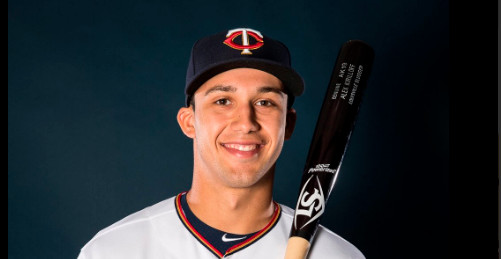
An article by Elizabeth Bloom for the Pittsburgh Gazette goes deeper on the exposure of our youth to Tommy John surgery. A highly touted prospect and the Twins first round draft pick in 2016, Alex Kirilloff found himself out with Tommy John. Kirilloff is no ordinary case for the injury however. He was coming off of an incredible season in which he batted .306 and hit 7  home runs. The star plays center field, which is why his case of Tommy John is especially surprising. Players that play positions other than pitcher have also begun to experience an increase in Tommy John surgery. Bloom goes deeper on how the injury has swept across the nation and taken kids from the sport they love.

kirilloffalex

Tommy John surgeries usually take a player out of action for about a year. And 15-19 year olds made up 57% of the Tommy John surgeries in the United States from 2007-2011. Youth players nationwide are finding themselves trapped in a sling for months with a searing pain in their elbows. But in order to avoid this, we must know what creates it. Bloom lists several known causes such as: “fastball usage, number of pitches, number of pitch types, rest between outings, release points, weight, height, age, peak velocity, average velocity, and even mound height.” The fact that scientists and doctors have pinpointed so many causes of the injury allows for it to be treated much more efficiently and effectively. Some say this increase in awareness is the main cause for the rising prevalence of the surgery in today’s youth.

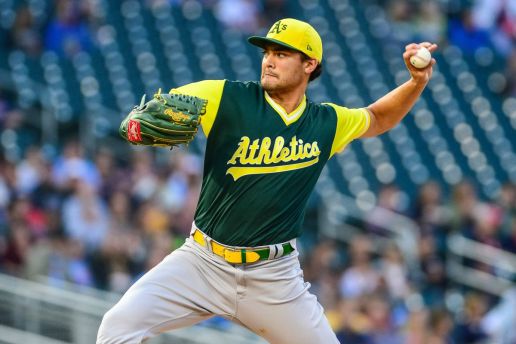
After Bloom explained the severity, cause, and dangers of Tommy John surgery, she went on to provide a solution. One that I think may be the key to solving this horrible injury. Pitch Smart. An organization that sets regulations on certain aspects of pitching at the high school and youth levels. They recommend that 17 and 18 year olds don’t throw more than 105 pitches per outing. 44 states have already implemented caps on high school pitch count at around 105 pitches. Limitations can only help during the high school season however, but there are alternative options to care for your arm. Bryson Lesniak, a professor at the University of Pittsburgh, says that the key to keeping a pitcher’s arm healthy is to slowly increase pitch count as the athlete gets older. Countless knowledgeable people recommend limiting pitch count in youth players, and for now, it seems to be the best option.

usa_today_11124239.0

The article does a great job of explaining how Tommy John surgery ruins opportunities for young players;it also provided ways to bypass the injury. Being a pitcher myself, I know the reality of this terrible injury. Last year, I was sidelined from pitching for several months as I struggled to keep my elbow healthy. My doctor told me that if I continued to push myself, Tommy John may be necessary. Immediately, I shut myself down and began physical therapy. This injury affects thousands and I was fortunate enough to avoid it, but pitchers across the country may not be so lucky. Everyone who steps on mound must take care of their arm, above anything else.


Baker Mayfield: Rising Star?

What comes to mind when you think of the Cleveland Browns? A terrible football team most likely. Perhaps even the worst football team. This is for good reason as well, because the Browns have not won a game for 635 days. That is, until last night. Last night the city of Cleveland felt the joy of something they have not felt for two years: a win. The article, “Baker Mayfield is the Mayor of Cleveland” by Jason Gay dives deeper into this historic game, and the man that led the charge for the Browns, Baker Mayfield. The controversial quarterback surprised some, and pleased many with his performance in the Thursday Night Football game. But there is more to the story when it comes to the Browns newest commodity.

Mayfield has been a hot topic of discussion ever since the Browns shocked many by drafting first overall in 2018. This was a surprising move, Cleveland, who was fresh off of a historic 0-16 season gambled on Baker who had just gotten a partial suspension for grabbing his crotch at the opposing team while playing for his alma mater, the University of Oklahoma. This was not isolated incident either, Mayfield also drove a flagpole into the center of the field at Ohio State, angering thousands of Buckeye fans.

The quarterback was seen nationwide as a risky move not only because of his flaring temper and unpredictability, but also because among the other quarterbacks of the NFL, Mayfield’s size and athleticism just weren’t super impressive. Critics deemed him too short to play at a high level and warned against selecting him high, yet the Browns gambled, and in Week Three of the 2018 NFL season, we got a sneak peak of Mayfield’s future and the new-look Browns.

The Browns came into the game on September 20th against the New York Jets with high hopes and expectations, they tied the Steelers back in week one which is a major feat if your team has lost every game they’ve played for the past two years. Despite the positive mindset going into the game, the Browns quickly found themselves down 14-0. Dragging them down was none other than starting quarterback Tyrod Taylor, who was an abysmal 4 for 14 with 19 yards nearing the end of the first half. So when Taylor went down late in the second quarter and left the field with concussion-like symptoms, the crowd rejoiced (sorry Tyrod).

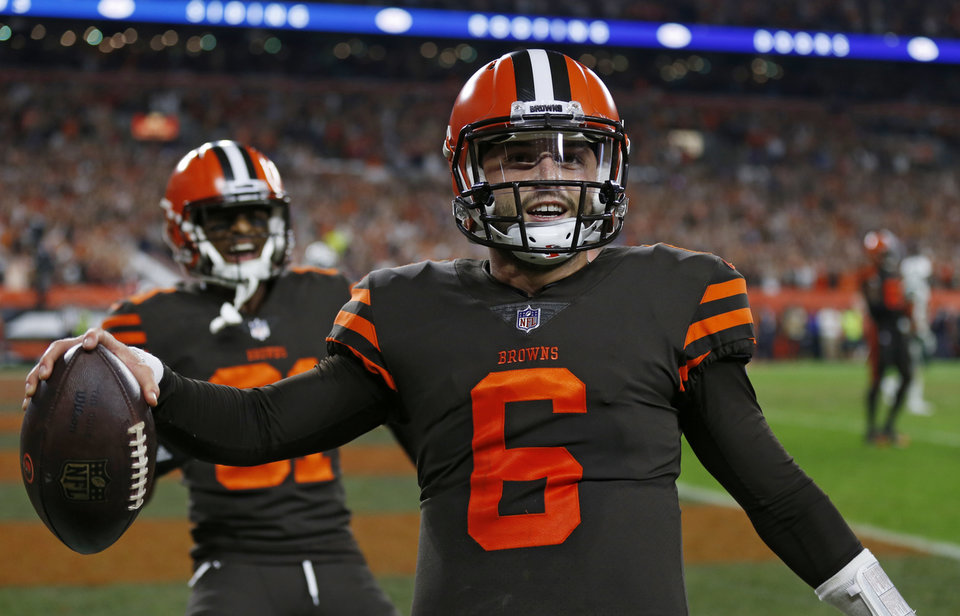
r960-6d452700b3fb12dd60d5e450a76fab23

Mayfield stepped in and absolutely took over the game. He finished with a stellar 17 of 23 for 201 yards in just 32 minutes of football. These numbers were enough to blow away the Jet’s opposing rookie quarterback, Sam Darnold, who put up an uninspired 161 yards on 15 completions. This incredible showing by the rookie gave Browns fans something that they have not had in a while: hope.

Many are quick to jump to the conclusion that Mayfield’s performance on Thursday was an anomaly or beginner’s luck. However, this undersized, underrated quarterback has more grit and grind than most, and I believe he will turn out just fine in the league.

Week 1 in the NFL

The most hotly contested and controversial sports league in the USA kicked off last weekend. And yes, it was crazy. We witnessed a blind side upset, a rare tie, and some surprising break out players. Week 1 in the NFL had it all, and without further ado, let’s jump right into it:

We are gonna start with the game that began the final season out in Oakland. The Raiders came face to face with a highly touted Los Angeles Rams squad. This game came shortly after Jon Gruden and company shipped star linebacker (LB) Khalil Mack to the Bears. That sure came back to bite them. Los Angeles dropped a heavy 33 points on the Raiders and ran away with the 33 to 13 victory. Oakland quarterback (QB) Derek Carr did not really help out the lackluster defense by throwing three interceptions, one of them being returned for a touchdown. The Raiders will look to improve upon a week 1 loss against in Denver against the undefeated Broncos.

Meanwhile, rookie QB Sam Darnold shocked the world in Detroit. After throwing a pick 6 on his first professional pass attempt, the youngster went on to go 16 for 21 with 198 yards and two touchdowns, carrying the Jets to a 48 to 17 victory over the Lions. In addition, the Lions defense looked sluggish and struggled to contain New York running back (RB) Isaiah Crowell. The youngest week 1 starting QB in 60 years will look to continue his hot streak at home against the Dolphins next week.

The Packers and Bears had a thriller of a game in which new addition LB Khalil Mack had a pick 6 and a strip sack. Aaron Rodgers managed to return from a knee injury in the fourth quarter of the game and score 3 late touchdowns to give Green Bay a 24 to 23 victory.

Alex Smith and the new look Redskins started the season strong against a horrid Arizona Cardinals team. In addition to Washington’s new quarterback performing well, new RB Adrian Peterson proved that he can still perform at a high level. The Redskins defense held the Cardinals to 6 first half yards and finished the game with a 24 to 6 win.

The Cowboys proved what I had been fearing for them – they have no one outside of Ezekiel Elliott. On the other hand, the same could be said for the Panthers and Cam Newton, who took care of business against Dallas by a score of 16 to 8.

One of the lowest profile games of the week took place out in Denver. The Broncos won by a slim margin against Russell Wilson and his slowly deteriorating Seahawks. The final score was 27 to 24 in a game where one-handed prodigy Shaquem Griffin took the field for the Seahawks for the first time ever. This game was a battle of below average teams, with the more talented of the two coming out on top.

Rookie QB Patrick Mahomes turned a lot of heads on Sunday. He carried the Chiefs to a 38 to 28 win over the division rival Chargers with 4 passing TDs. He had a little help from “The Cheetah,” Tyreek Hill, who had 2 touchdowns on the day. Los Angeles RB Melvin Gordon was a threat as always but he could not outpace the firepower of Mahomes and his offense.

The Baltimore Ravens absolutely destroyed the Bills by a score of 47 to 3. There isn’t much to say about this one other than the fact that Buffalo has the worst team in the league. By far.

The Jaguars played a very Jaguars-esque game on Sunday in against the Giants. QB Blake Bortles was below average (as usual), the defense smothered the Giants for a meager 15 points (as usual), and RB Leonard Fournette showed off what his rookie season has the potential to be – amazing. Fournette’s counterpart in the “star rookie RB” conversation just so happened to be on the other side of the field, Saquon Barkley, and he carried the Giants to a close game with a final score of 20-15 in favor of Jacksonville.

What is going on down in Tampa Bay? Starting QB Jameis Winston was injured on Sunday for their game against the Buccaneers’ game against the Saints, so unreliable back-up Ryan Fitzpatrick was in. The Saints should easily win, right? Wrong. Fitzpatrick threw for 417 yards and 4 touchdowns and shocked the world by topping New Orleans and they’re highly touted defense 48 to 40.

The Patriots took care of business down in Houston on Sunday. Rob Gronkowski got the 27th 100 yard game of his career as 40-year-old Tom Brady and Co. spoiled the return of Texans QB Deshaun Watson from the ACL tear that sidelined him in the middle of last season.

Similarly to the Patriots, the Vikings handled an expected win with virtual ease. They took out the 49ers by a score of 24 to 16 in Minnesota on Sunday, knocking 49ers QB Jimmy Garoppolo to a career 6-1 as a starter. Jimmy G will have to start winning soon if he wants to keep the hype around him intact.

The Dolphins and Titans played a 7 hour game on Sunday. Yes, a 7-hour game. There was a rain delay that separated the two halves of the game by 4 hours. And when the sky cleared, QB Ryan Tannehill and his Dolphins closed things out by a score of 27 to 20.

I’m sure you all know QB Andrew Luck, the guy who hasn’t played a full season in 3 years because of arm injuries. Yeah, well he attempted 53 passes on Sunday, not the best plan if you ask me. It might have been justified if the Colts would have won, but the Bengals stomped them 34 to 23.

That brings us to the surprising game of the week, Browns vs. Steelers. The Browns did not win a game in 2017 and the Steelers were one of the final eight teams remaining in the league. And they tied. Yes, tied. A missed extra point and field goal by Browns kicker (K) Zane Angeles proved to be fatal as Cleveland narrowly missed their first win in over a year.